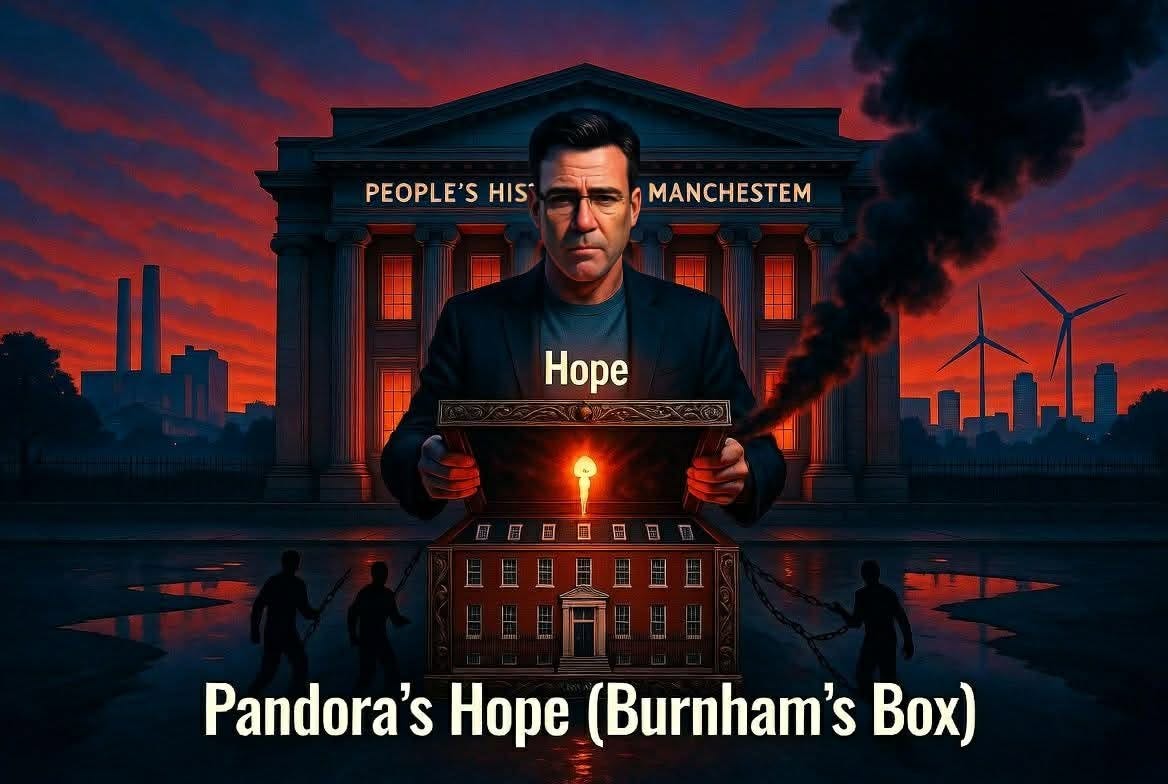
In his first major speech as prime minister-in-waiting, Andy Burnham struck a familiar chord in British politics: the promise of renewal. Addressing an audience at Manchester’s People’s History Museum, Burnham positioned himself as the architect of a “rewired Britain,” vowing to devolve power from Westminster through initiatives like a “No. 10 North,” to revive struggling regions, boost housing, and restore faith in governance.
Central to his message was a pledge to “give them hope back” to people and places long neglected by politics. “Imagine good growth in every postcode and hope in every heart,” he declared. “Imagine no more, let’s make it happen.”
Yet, as with many political rallying cries, this invocation of hope invites deeper scrutiny. Hope, after all, is not an unalloyed virtue. Its origins in the ancient myth of Pandora’s Box reveal a more ambiguous nature. According to the Greek tale, Pandora, the first woman, was given a jar (often mistranslated as a box) containing all the world’s evils. When she opened it out of curiosity, plagues, sorrows, and misfortunes escaped to afflict humanity. Only one thing remained inside: Elpis, or Hope. Traditional interpretations often cast Hope as the one positive force left to sustain mortals amid suffering. But a more cynical reading, echoed in philosophical traditions from Nietzsche to modern sceptics, sees it differently. Hope is the last evil because it prolongs endurance. It persuades the afflicted to bear today’s hardships in anticipation of an uncertain tomorrow, delaying rebellion or radical change.
READ MORE -
https://guerrillademocracy.blogspot.com/2026/07/the-pandoras-promise-andy-burnhams-gift.html